

Every small company knows the moment. A long-time employee resigns, and with them goes how billing really works and why the biggest client’s setup looks the way it does. The knowledge did not vanish because nobody cared. It vanished because it lived in one head, an inbox, and chat threads nobody can find again. The fix is rarely more effort or more meetings. It is a simple company knowledge base: one shared place where the team writes down what it learns, so an answer outlives the person who first knew it.
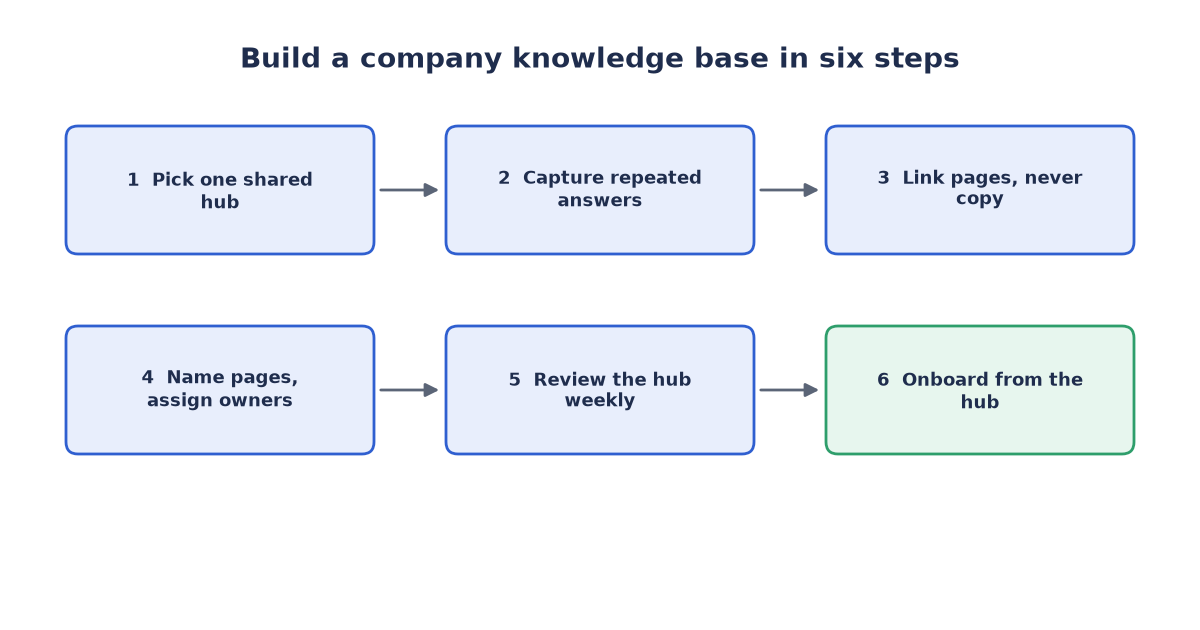
Figure 1: From scattered answers to one shared hub
Why company knowledge walks out the door
Knowledge in a small team is mostly tacit. It sits in routines nobody writes down, because they feel obvious to the person holding them. Three storage places dominate. The human head: fast and flexible, but it walks out the door every evening and, one day, for good. The inbox: answers sink under later messages, and search fails when you need it most. Chat threads: useful in the moment, gone from memory a week later. All three are personal, temporary and hard to search: poor homes for anything the whole team depends on.
The table shows where each piece belongs instead.
| Where knowledge lives today | The risk | Where it should live |
|---|---|---|
| One person’s head | Leaves with the person | A how-to page in the hub |
| Email threads | Buried after a week | A decision log page |
| Chat channels | Scroll out of sight | A short answer, linked from chat |
| Personal notes | Invisible to the team | A shared page with an owner |
| Scattered local files | Version chaos | One hub page, one file store |
The point is not to ban chat or email. It is to make sure anything worth knowing twice ends up in the knowledge base, and that conversations link to the page.
What a company knowledge base actually is
Strip the jargon away and you get the core idea of knowledge management: capture what the organization knows so it can be reused without asking the original author. In practice, a company knowledge base is a modest set of shared pages with three properties:
- Anyone on the team can find a page without knowing who wrote it.
- Anyone can edit a page, so it stays roughly right as things change.
- Every page has one owner, responsible for its correctness.
A small company does not need a library, just a few dozen pages that answer the questions that keep coming up: how a recurring job is done, how a service is configured, what was agreed with a client, what to do when something breaks at an awkward hour. If a question gets asked a second time, the answer deserves a page in the knowledge base.
One hub beats five tools
The first decision is where the pages live. The category is wide: open-source wikis, hosted collaboration platforms, shared document systems. What matters is three properties: full-text search, links between pages, and permissions a small team can manage without an administrator. If your people work across locations or time zones, weigh the choice carefully; our guide to tools for remote teams looks at the tools distributed teams use.
Pick one hub for the knowledge base and resist running a second system just for projects or just for notes. Two hubs mean every answer has two possible homes, and guessing is worse than having none. Chat, email and issue trackers should point at the hub, not compete with it.
The capture habit does the real work
A tool is only storage; the habit is the system. A knowledge base earns its keep when writing things down becomes a reflex attached to events the team already has:
- After answering a colleague’s question in chat, paste the answer into a page and link it back.
- After fixing something that broke, write five lines about the cause and the fix.
- After a client call settles something, record the decision and the reasoning while it is fresh.
- After finishing a recurring task, turn your notes into a runbook page.
Personal note systems, what some call personal knowledge management, serve one person and stay invisible to everyone else. The default home for a useful note should be the shared hub, not a private folder.
Company knowledge base ground rules
A few conventions keep the knowledge base usable as it grows.
- Links over copies. Never paste the same instructions into three pages; write them once and link. The Zettelkasten method drew its strength from this principle: small linked units beat duplicated blocks, because updating one place updates every path to it.
- Predictable naming. A fixed pattern per page type, such as Client – name – setup, lets people guess titles instead of searching.
- One owner per page. The owner is not the only author, but they decide whether a page is still right. Ownership without a name is ownership by nobody.
- Dated decisions. A decision log entry carries the day it was made, so a reader can tell current practice from history.
These rules cost nothing, and they separate a knowledge base people trust from a graveyard of stale pages nobody opens.
A short weekly review keeps it alive
Once a week, for fifteen minutes, one person (rotating works well) skims the hub: pages edited, chat questions that still lack a page, runbooks used. Two outcomes are enough: create the missing pages and mark stale ones for refresh. The hub also deserves the care of any business-critical system: check access when someone joins or leaves, and make sure everything can be exported and restored, as our backup and restore guide describes for websites. A hub that cannot be lost by accident is a hub people dare to write in.
Onboarding: the first real test of the company knowledge base
The clearest payoff of a shared knowledge base shows up when someone joins the team. Instead of three days of asking whoever is around, the person joining gets a start page: how the company works, how to set up a machine, who does what, and the ten pages they need first. Two things make it stick. They write down every question the start page could not answer, which improves onboarding for everyone after them. And the mentor revisits the core topics after a few days and again after two weeks, a light form of spaced repetition, because reading a page once rarely survives a busy first month. Every question without a page is also a page to write.
A company knowledge base is not a project with an end date; it is a habit with a home. One hub, a capture reflex, links instead of copies, named owners and a short weekly review will carry a small team further than an elaborate system nobody feeds. In our experience, the hardest part is the first two weeks, and an outside eye makes it easier. If you want a second opinion on how your team stores what it knows, book a free 30-minute review through our contact page, and we will sketch the smallest company knowledge base that could work for you. You can also write to us at info (at) abcsoft (dot) digital.
Add a Comment